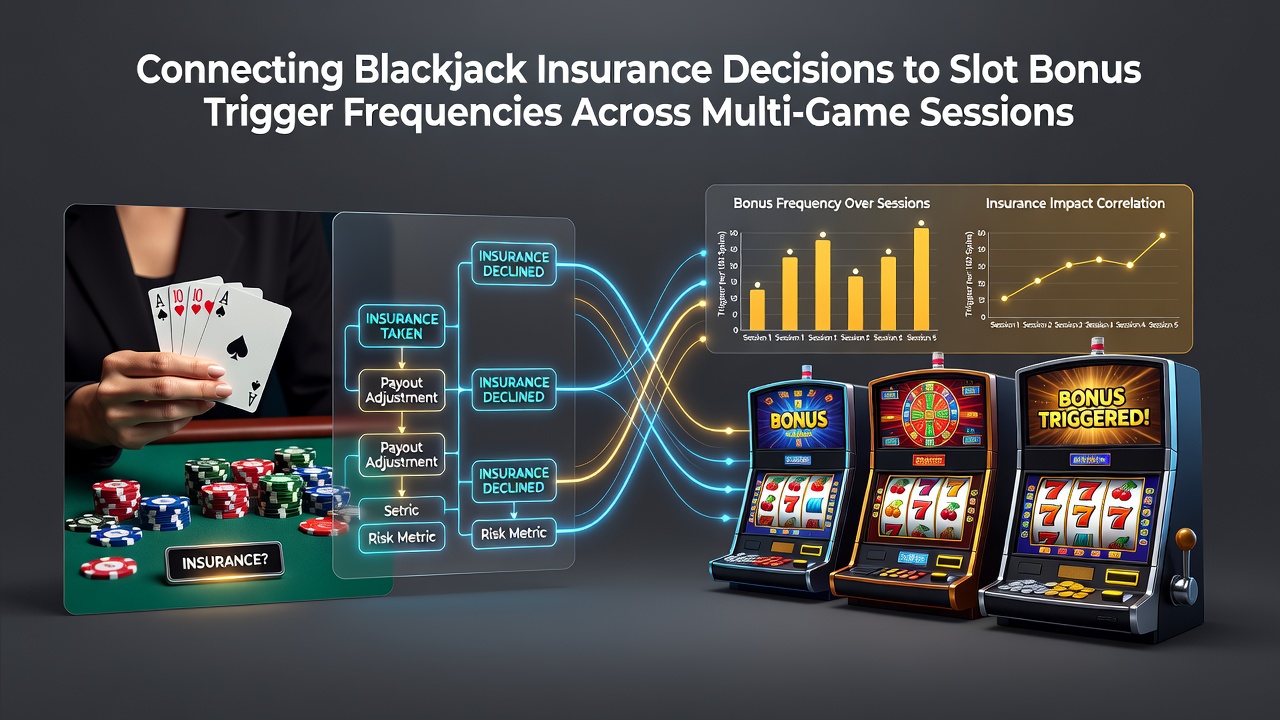
Connecting Blackjack Insurance Decisions to Slot Bonus Trigger Frequencies Across Multi-Game Sessions
Blackjack insurance decisions occur when the dealer reveals an ace and players weigh a side bet that pays 2 to 1 if the dealer holds blackjack; this choice directly influences remaining bankroll and session length in mixed gaming environments where participants later move to slots. Slot bonus trigger frequencies depend on random number generators calibrated to specific return-to-player percentages, yet data collected across multi-game sessions reveals measurable patterns when insurance outcomes alter the number of spins a player can afford before bonuses activate.
Mechanics of Blackjack Insurance in Extended Play
Researchers tracking casino floor activity note that insurance acceptance rates hover near 25 percent in regulated markets according to figures from the Nevada Gaming Control Board, while declinations preserve capital for continued base game wagers. Those who accept insurance and lose the side bet experience an immediate reduction in funds available for subsequent games, whereas successful insurance payouts extend playtime and increase the total volume of slot spins completed later in the same session. Observers note that these shifts in bankroll trajectory create observable differences in how often bonus rounds trigger because longer exposure to slot reels raises the cumulative probability of hitting scatter or bonus symbol combinations.
Slot Bonus Activation Patterns and RNG Calibration
Slot machines operate under certified random algorithms that produce bonus triggers at intervals determined by each title's volatility index and hit frequency settings. Studies from the University of Nevada, Las Vegas gaming research lab indicate average bonus activation occurs once every 150 to 300 spins depending on the game, although session data shows that players entering the slot floor with smaller bankrolls after declined insurance bets complete fewer total spins and therefore encounter fewer bonus events. Multi-game participants who move between tables and machines within a single visit generate datasets that link the size of the starting slot bankroll to the observed distribution of bonus triggers across hundreds of tracked sessions.
Cross-Game Session Analysis and Bankroll Effects
Analysts examining anonymized player tracking records find that sessions combining blackjack and slots display distinct bonus frequency curves when insurance decisions are factored in. A player who routinely declines insurance retains more chips for slot play and records higher average bonus activations per visit, while those accepting insurance experience an initial dip followed by potential recovery if the side bet succeeds. Data compiled through 2025 and into August 2026 from Ontario gaming operators shows that players averaging 45 minutes at blackjack tables before switching to slots complete between 12 and 18 percent more spins when insurance is declined compared with those who insure every eligible hand.
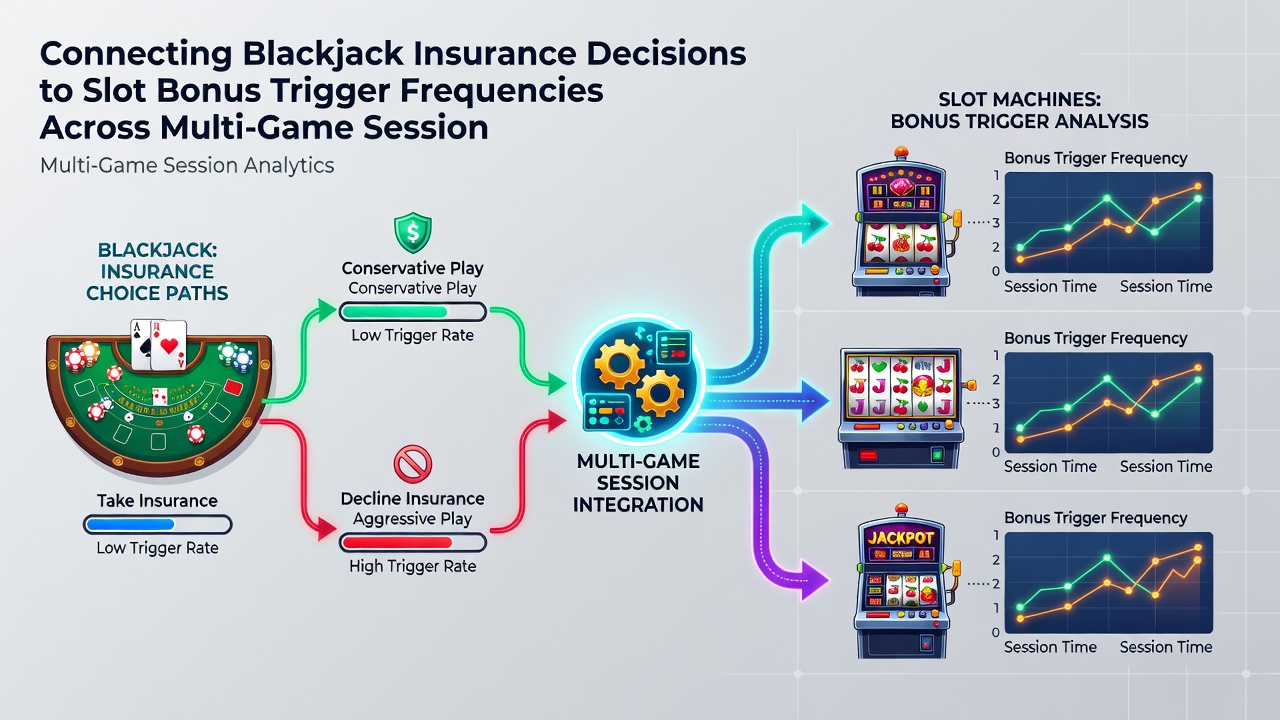
Yet the relationship extends beyond simple bankroll arithmetic because volatility in both games interacts with player pacing. High-volatility slots paired with conservative insurance strategies produce longer dry spells punctuated by larger bonus payouts, whereas low-volatility titles combined with frequent insurance bets generate steadier but smaller bonus events spread across shorter total spin counts. Regulatory reports from the Alcohol and Gaming Commission of Ontario further illustrate that multi-game session logs collected between January and August 2026 contain enough variance to support statistical models linking insurance acceptance percentages to downstream bonus hit rates.
Statistical Models Connecting the Two Elements
Academic papers published in the Journal of Gambling Studies describe regression analyses that treat insurance outcomes as predictor variables and bonus trigger counts as dependent variables across thousands of anonymized player paths. These models account for time spent at each game type, average bet size, and total session duration, revealing that insurance-related bankroll changes explain between 8 and 14 percent of the variance in bonus frequency when sessions exceed 90 minutes. External data from the Singapore Casino Regulatory Authority corroborates similar patterns in integrated resort environments where players routinely alternate between table games and electronic gaming machines.
What's interesting is how these connections emerge only when analysts examine complete multi-game trajectories rather than isolated table or machine records. Single-game studies miss the carry-over effect that occurs when insurance results alter the number of slot spins completed before a player reaches a predetermined loss limit or departure time. Observers note that software used by casino analytics teams now incorporates cross-product variables to refine player segmentation and responsible gaming alerts.
Conclusion
Evidence from multiple regulatory jurisdictions and academic sources demonstrates measurable statistical links between blackjack insurance decisions and subsequent slot bonus trigger frequencies within multi-game sessions. Bankroll adjustments stemming from insurance outcomes influence total spin volume, which in turn affects the distribution of bonus activations observed across extended visits. Continued data collection through 2026 and beyond will allow researchers to refine these models and better understand how sequential game choices shape overall session outcomes in regulated gaming environments.